
Dalur
Dalur is a village of around 39 people on the eastern side of Sandoy, the southernmost settlement on the island, sitting at the base of a broad green valley enclosed by steep mountain walls. Its name simply means valley in Faroese. The village was not connected to the rest of Sandoy by road until 1963, and before that the only access was on foot via ancient cairn paths over the mountains to the neighbouring villages of Húsavík and Skarvanes. A mountain tunnel now connects Dalur to Húsavík to the north, replacing the old cliff-edge road that was feared by many drivers for its narrow width and sheer drops. The village is known for its strong chain dance tradition and its peaceful, genuinely remote character. From the south end of the village a road leads to a trail toward the Skorin bird cliffs at the southern tip of Sandoy, where large seabird colonies nest on the cliff faces.
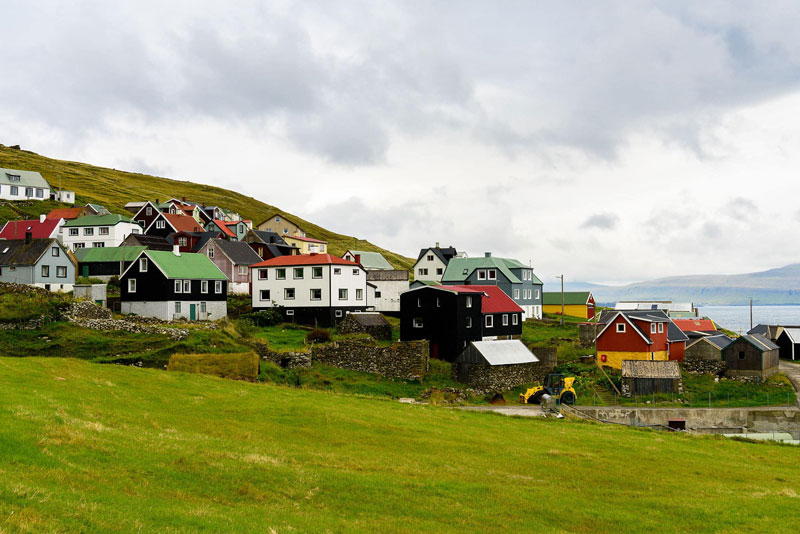
A Valley Village of 39 People on Sandoy, Not Reachable by Road Until 1963, with Cairn Paths Still Leading Over the Mountains to Its Neighbours
Dalur sits at the southeastern end of Sandoy, the island directly south of Streymoy reached by a sub-sea tunnel from Kirkjubøur. The village occupies the flat floor of a wide valley, with the mountain walls rising on all sides creating a natural bowl that gives the settlement a quality of quiet enclosure unusual even by Faroese standards. The population of around 39 makes it one of the smaller inhabited places in the archipelago. Until 1963, when the first road was completed, the only ways to reach Dalur were on foot along cairn paths across the mountains or by boat. The old road connecting Dalur to Húsavík to the north was a single-lane cliff-edge track with exposed drops that many local drivers found too frightening to use regularly. It has now been superseded by a mountain tunnel, though the old road route remains walkable. The cairn paths over the hills to Húsavík and Skarvanes, used for centuries before any road existed, are still maintained and form part of the island's hiking network.
Sandoy as an island is known for its relative gentleness compared to the northern islands of the Faroe archipelago: the name means Sand Island, and the island has sandy beaches, flatter terrain in places, and a slightly warmer and calmer character. Dalur sits at the more dramatic end of the island's landscape spectrum, with the valley walls rising steeply around the village. The Faroese chain dance has been particularly strong in Dalur, as in many of the more isolated Faroese communities where the tradition was preserved through long winters with limited outside contact. From the southern end of the village a short road and then a trail leads toward the Skorin bird cliffs at the island's southern tip, where puffins, guillemots, razorbills, and fulmars nest in large numbers on the exposed cliff faces. The hike from Dalur to Skarvanes along the old cairn path offers coastal views and the sense of following a route that predates any motorised access to this part of the island.
Sandoy is reached from Streymoy via the Sandoyartunnilin sub-sea tunnel from Kirkjubøur, a crossing of about 10 minutes that opened in 2018 and replaced the previous ferry connection. From the tunnel exit at Skopun it is about 20 kilometres by road to Dalur, passing through the island's main village of Sandur. Dalur has a campsite, basic facilities, and a village hall. There are no cafés or shops; visitors should bring food and supplies from Sandur or Tórshavn. The chain dance tradition is performed at village gatherings and festivals. The island of Sandoy and its villages are generally quieter and less visited than Streymoy and Eysturoy, giving Dalur a genuinely off-the-beaten-track character even within the Faroe Islands.

