
Drítvík Cove
Drítvík is a sheltered cove on the western tip of the Snæfellsnes Peninsula, enclosed by two lava headlands that made it a natural landing place for fishing boats for centuries. From the mid-16th to the mid-19th century it was Iceland's most active seasonal fishing station, with up to 600 fishermen gathering here each spring to row open boats into the North Atlantic after cod. The ruins of stone shelters and fish-drying enclosures still stand on the shore, and four lifting stones of graduated weights remain from the strength tests used to judge whether a man was fit for a crew. The cove is reached by a 15 to 20 minute coastal walk from the Djúpalónssandur car park, through one of Snæfellsnes's most atmospheric lava landscapes.
Iceland's Busiest Old Fishing Cove, Preserved in Lava and History on the Snæfellsnes Coast
Drítvík owes its history to geography. The two lava headlands flanking the cove, Djúpalón to the east and a second promontory to the west, created a sheltered natural harbour on an otherwise exposed stretch of Atlantic coastline, and from the 1500s onward it became the principal base for Iceland's spring cod fishing season. At its peak the cove held as many as 600 fishermen between April and mid-May, launching open rowing boats into the North Atlantic in conditions that were frequently deadly. The stone ruins scattered across the cove floor are the remnants of the shelters, storehouses, and fish-drying racks that supported this industry for three centuries. The cove was gradually abandoned as the fishing industry modernised and moved to harbours better suited to powered vessels in the late 19th century, leaving the landscape largely undisturbed since.
On the trail between the car park and the cove, four rounded stones of graduated sizes sit in the lava field. These are the áþreystingarsteinar, or lifting stones, used by fishing captains to assess the strength of prospective crew members. The stones are named Fullsterkur (full strong, 154 kg), Hálfsterkur (half strong, 100 kg), Hálfdrættingur (half carrier, 54 kg), and Amlóði (weakling, 23 kg). A man who could lift Hálfdrættingur to the gunwale height of a boat was considered strong enough to row. Many visitors attempt the lift. The lava field surrounding the path is rich in named formations, including Tröllakirkja (the Troll Church) and Bárðarskip (the Ship of Bárður), the latter a reference to Bárður Snæfellsás, the half-troll guardian figure of the Snæfellsnes Peninsula in Icelandic legend.
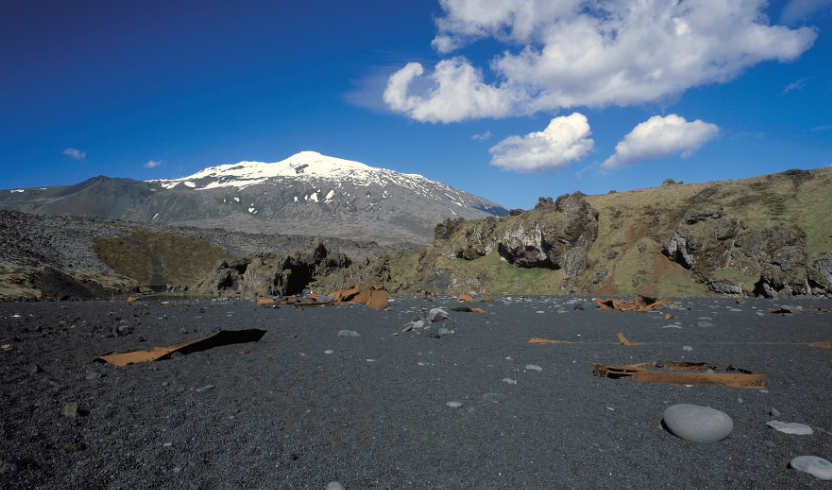
Drítvík is accessed via the coastal trail from the Djúpalónssandur car park, a walk of around 1.5 kilometres over uneven lava terrain taking 15 to 20 minutes each way. Sturdy footwear is essential. There is no separate road access to the cove itself. The car park is on Route 572, reached from Route 54 on the southern side of the Snæfellsnes Peninsula, and is about 190 kilometres from Reykjavík, roughly two and a half hours by car. The Djúpalónssandur beach itself, with its own lifting stones and the rusted wreckage of the 1948 trawler Epine scattered across the black pebbles, is a worthwhile stop immediately before or after the walk to Drítvík.

