
Glymur Waterfall
Glymur is Iceland's second-tallest waterfall, dropping 198 metres into a narrow basalt canyon carved by the Botnsá river at the back of Hvalfjörður fjord in West Iceland. It is one of the most rewarding day hikes accessible from Reykjavík, and the journey to reach it is half the appeal: the trail passes through a small lava cave, crosses the river on a seasonal log bridge, and follows exposed canyon-edge paths with sheer drops to the river below. The name Glymur means rumble in Icelandic, and the sound of the falls echoing off the canyon walls earns it.
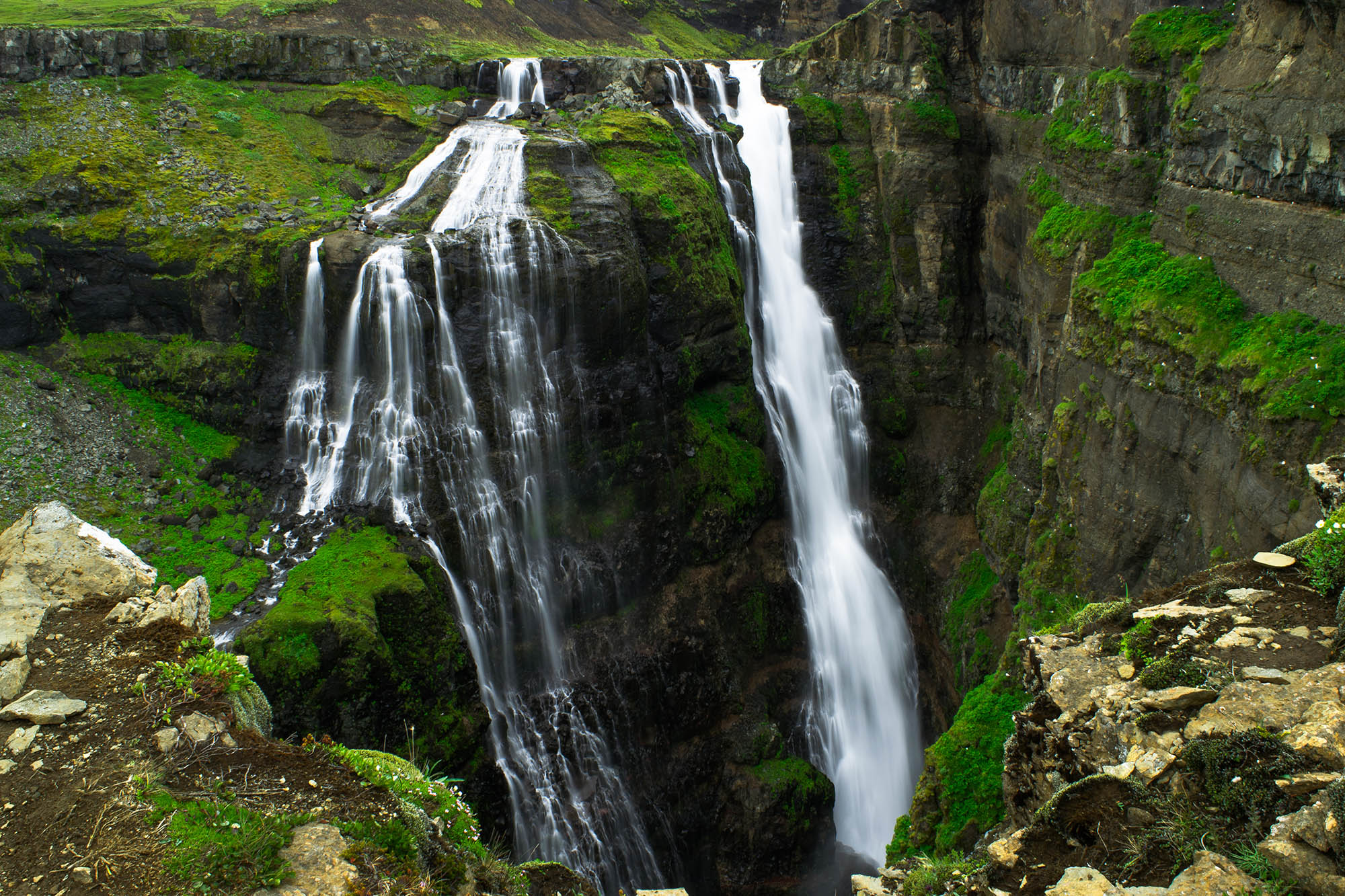
Iceland's Second-Tallest Waterfall, Earned by a Canyon Hike an Hour from Reykjavík
Glymur falls 198 metres from the Hvalvatn lake above into the Botnsá river canyon below, making it the second-tallest waterfall in Iceland after Morsárfoss, which was only measured in 2011 when the retreating Morsárjökull glacier revealed it. Glymur was considered Iceland's tallest for decades before that. The canyon it drops into is tight and dramatically proportioned, the dark basalt walls draped in moss kept perpetually wet by the spray, and the waterfall itself appears as a slender white ribbon from the viewpoints above. The geology here reflects the same pattern found across Iceland: softer volcanic ash layers eroded quickly while harder basalt remained, producing the sheer-sided gorge that concentrates and amplifies the sound of the falls.
The hike to Glymur is around 7 kilometres return and takes most people three to four hours at a comfortable pace. The trail begins at the Botnsdalur valley car park and follows the river upstream before entering a small lava cave that forms a natural passage through the rock, requiring a short scramble on hands and knees. Above the cave, a seasonal log bridge is placed across the river each summer, allowing the classic loop route that crosses the water twice and provides views of the falls from both canyon walls. The upper river crossing above the falls requires wading and is only safe during mid-summer when water levels are lower. Narrow ledge paths along the canyon rim are exposed and require care, particularly in wet conditions. Local folklore connects the canyon to a cursed man transformed into a whale named Rauðhöfði, who thrashed up the river and carved the gorge; the place name Hvalfjörður, Whale Fjord, points back to the same story.
Glymur is accessible from late May to October, when the log bridge is in place and trail conditions are reasonable. The trailhead at Botnsdalur is reached via Route 47, turning off the Ring Road before the Hvalfjörður Tunnel. The drive from central Reykjavík takes about an hour. Waterproof boots with good grip are essential; the trail is unsuitable for standard trainers. The gap analysis notes this attraction appears in the CMS under the combined entry Hvalfjörður (Glymur) — confirm whether a standalone Glymur entry is needed or whether the existing entry should be updated and republished.

