
Grjótagjá Cave
Grjótagjá is a small lava cave a few kilometres east of Lake Mývatn in North Iceland, split along a volcanic fissure and half-filled with geothermal water of a striking clear blue. The cave has two entrances and steps leading down to the thermal spring, which sits at around 45 to 50 degrees Celsius — too hot to bathe in safely, despite its inviting appearance. It is one of the most atmospheric stops on the Mývatn area circuit and became internationally recognised after featuring in season three of Game of Thrones as the cave where Jon Snow and Ygritte shelter from the cold.
A Lava Fissure Cave Near Mývatn with Thermal Blue Water and a Game of Thrones Story
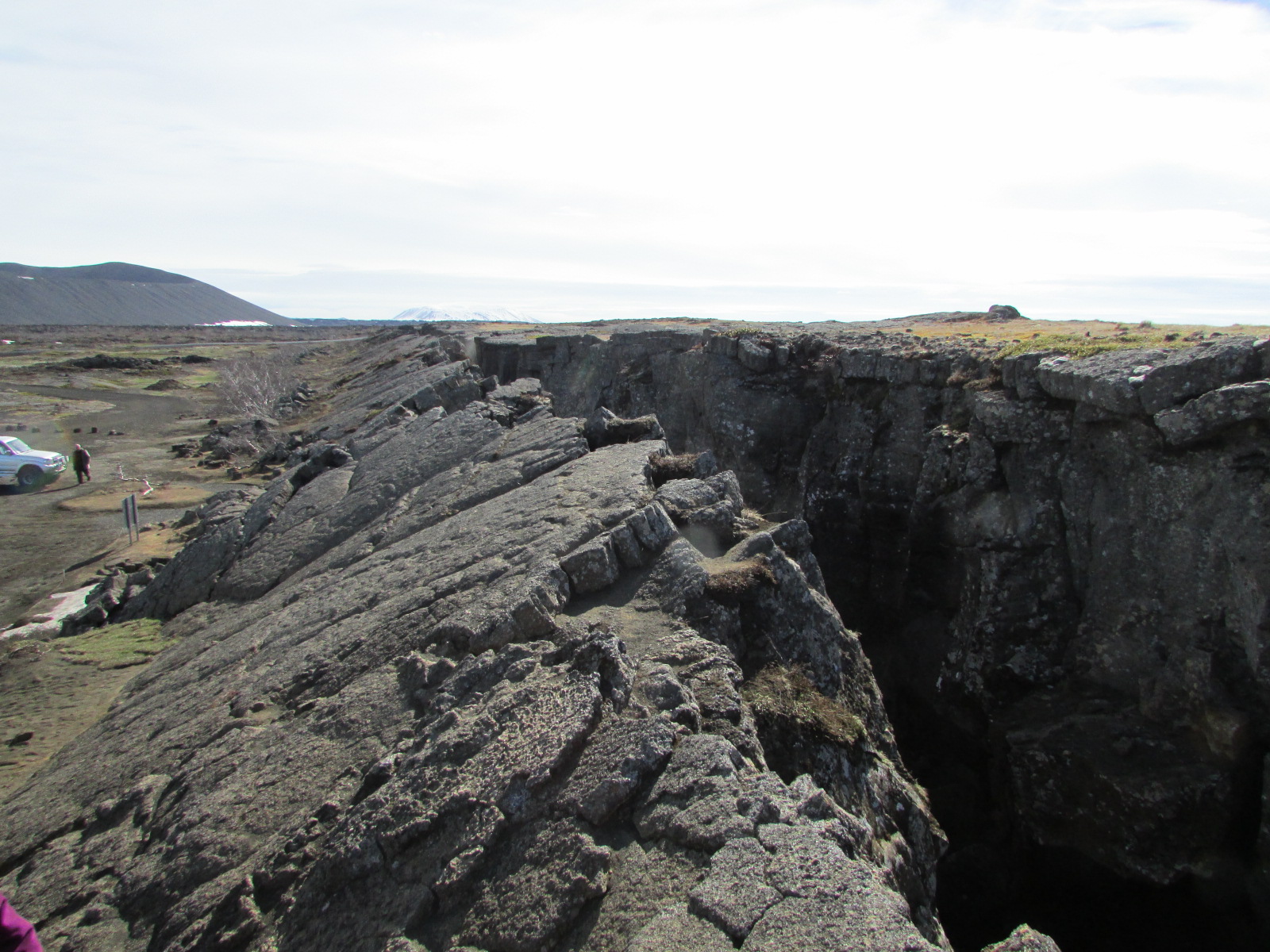
Grjótagjá formed as part of the same volcanic rift system that created the Mývatn area's extraordinary landscape of craters, lava fields, and geothermal vents. The cave is a lava tube fissure, meaning it opened along a crack in the volcanic rock rather than forming as a hollow flow tunnel, and the two parallel entrances reflect this split character. Geothermal groundwater collects inside, heated by the volcanic activity below, and glows with a vivid blue-green colour where light enters from above. Historically, local farmers used the cave as a bathing pool, with one side traditionally used by women and the other by men. During the Krafla eruption period between 1975 and 1984, volcanic unrest in the area pushed the water temperature inside Grjótagjá up to 60 or 70 degrees Celsius, making it completely unusable for bathing. The temperature has since settled back to around 45 to 50 degrees, which remains too hot for safe bathing. The cave is private property, belonging to the Vogar farm, and bathing is not permitted.
Grjótagjá's global profile increased dramatically after its appearance in Game of Thrones. In season three, the cave was used as a filming location for a scene between Jon Snow and Ygritte, and the otherworldly blue water and low lava ceiling translated extraordinarily well on screen. The production used the real cave interior with minimal set dressing, meaning what viewers saw was almost entirely the actual rock and water. Since the episode aired, visitor numbers to the cave have increased significantly and it has become a firm fixture on Mývatn area itineraries. A nearby sister fissure, Stóragjá, is less visited but similar in character, with cooler water and a narrower passage.
Grjótagjá is easy to reach by car and is free to visit. It sits just off Road 860, a few kilometres north of the Ring Road near the Mývatn area. The cave is a natural stop on the Diamond Circle route, which connects Mývatn, Dettifoss, Ásbyrgi Canyon, and Húsavík. The walk from the car park to the cave entrance takes only a few minutes. Visitors are asked to stay on the marked paths and not to enter the water. The cave is small and can feel crowded during peak summer hours; early morning visits tend to be significantly quieter.

