
Ingólfshöfði Promontory
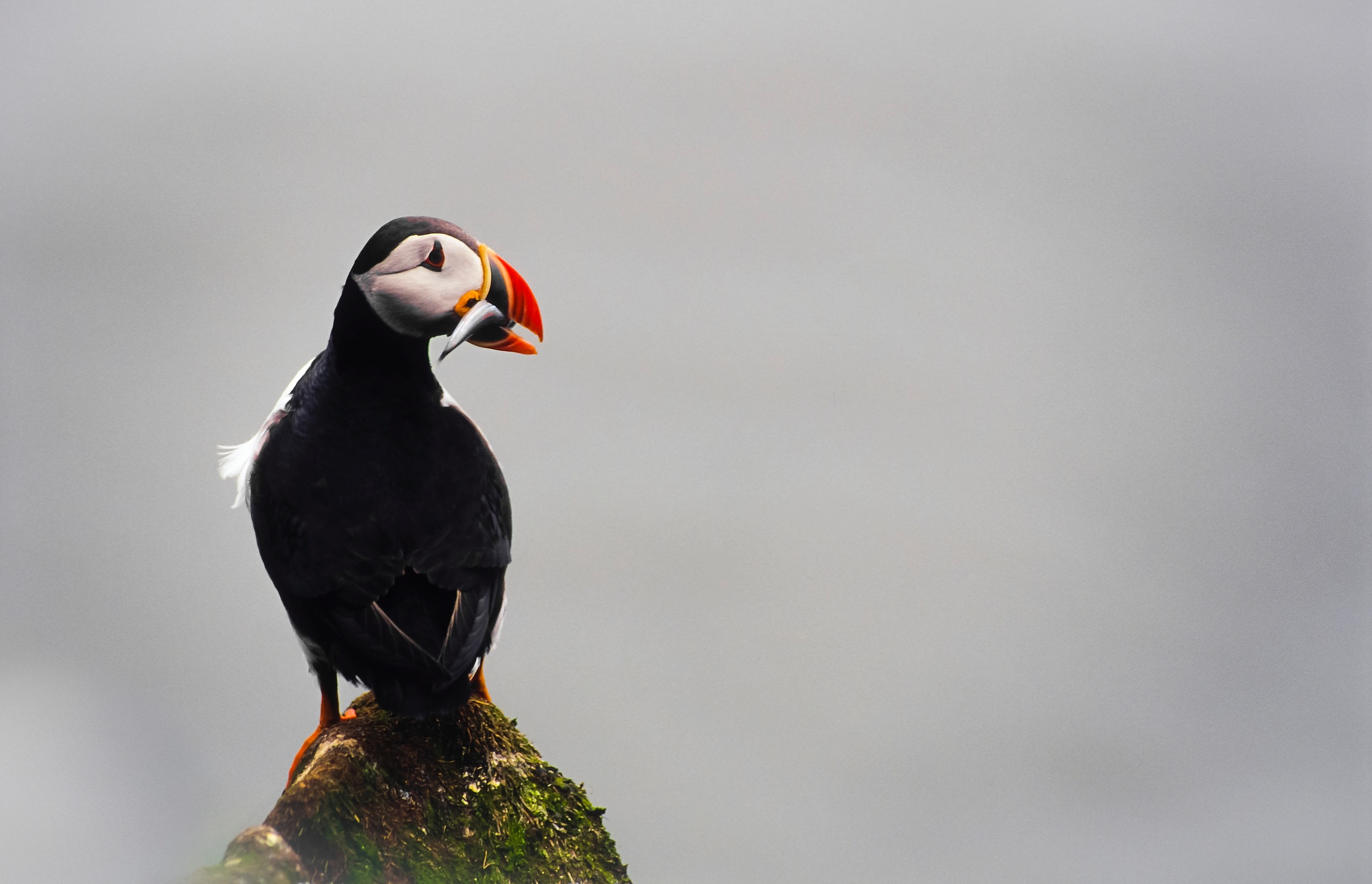
Ingólfshöfði is a remote 75-metre headland rising from Iceland's South Coast roughly halfway between Skaftafell and Jökulsárlón, separated from the mainland by several kilometres of black sand marshland. The promontory is named after Ingólfur Arnarson, widely regarded as Iceland's first permanent settler, who is believed to have spent his first winter here in 874 AD. Today it is one of the most important seabird nesting sites in southeast Iceland, with large puffin colonies present from mid-May to mid-August alongside great skuas, fulmars, and kittiwakes.
A Remote Viking Headland on the South Coast, Home to Puffins and a Piece of Iceland's Origin Story
Ingólfshöfði translates roughly as Ingólfur's headland, a reference to Ingólfur Arnarson, the Norse settler traditionally credited as the first permanent resident of Iceland. According to the sagas, he arrived on the island around 874 AD and spent his first winter at this promontory before moving west to found what would become Reykjavík. A stone monument on the cape marks the site. The headland itself is a 75-metre-high remnant of an ancient sea island, now connected to the mainland by a broad expanse of coastal marshland, black sand flats, and shallow streams that are only passable at low tide. The surrounding area sits at the eastern edge of Skeiðarársandur, the vast glacial outwash plain formed by centuries of jökulhlaup floods from Vatnajökull.
Ingólfshöfði is a protected nature reserve and one of Iceland's most productive seabird nesting grounds. Puffins arrive in mid-May and remain until mid-August, nesting in burrows on the grassy clifftops and often visible at very close range. The reserve also holds one of Iceland's largest great skua colonies; skuas are territorial during nesting season and will dive-bomb intruders near their young, so visitors are advised to hold a stick or arm aloft as a deterrent. Other species include northern fulmars, black-legged kittiwakes, razorbills, and common guillemots. The cape's isolation and lack of land predators make it an exceptionally productive breeding site. A small lighthouse, built in the early 1900s, stands on the clifftop alongside a historic rescue hut for shipwreck survivors.
Because the marshland crossing is only safe at low tide, access to Ingólfshöfði is exclusively by guided tour. A tractor-drawn hay cart departs from a small check-in hut approximately 2 kilometres south of the Ring Road, crosses roughly 6 kilometres of coastal flats in about 30 minutes, and deposits visitors at the base of the promontory for a 2 to 3 kilometre guided walk around the clifftops. Tours run twice daily from May to August, with limited spaces per departure. The site is located about 60 kilometres west of Höfn and roughly 330 kilometres from Reykjavík along Route 1.

