
Krafla
Krafla is a volcanic caldera system in North Iceland, situated about 24 kilometres northeast of Lake Myvatn. One of Iceland's most persistently active volcanic areas, its last eruption cycle ran from 1975 to 1984, and the resulting lava fields are still visibly raw today, with steam rising from fissures across a landscape that genuinely looks like another planet.
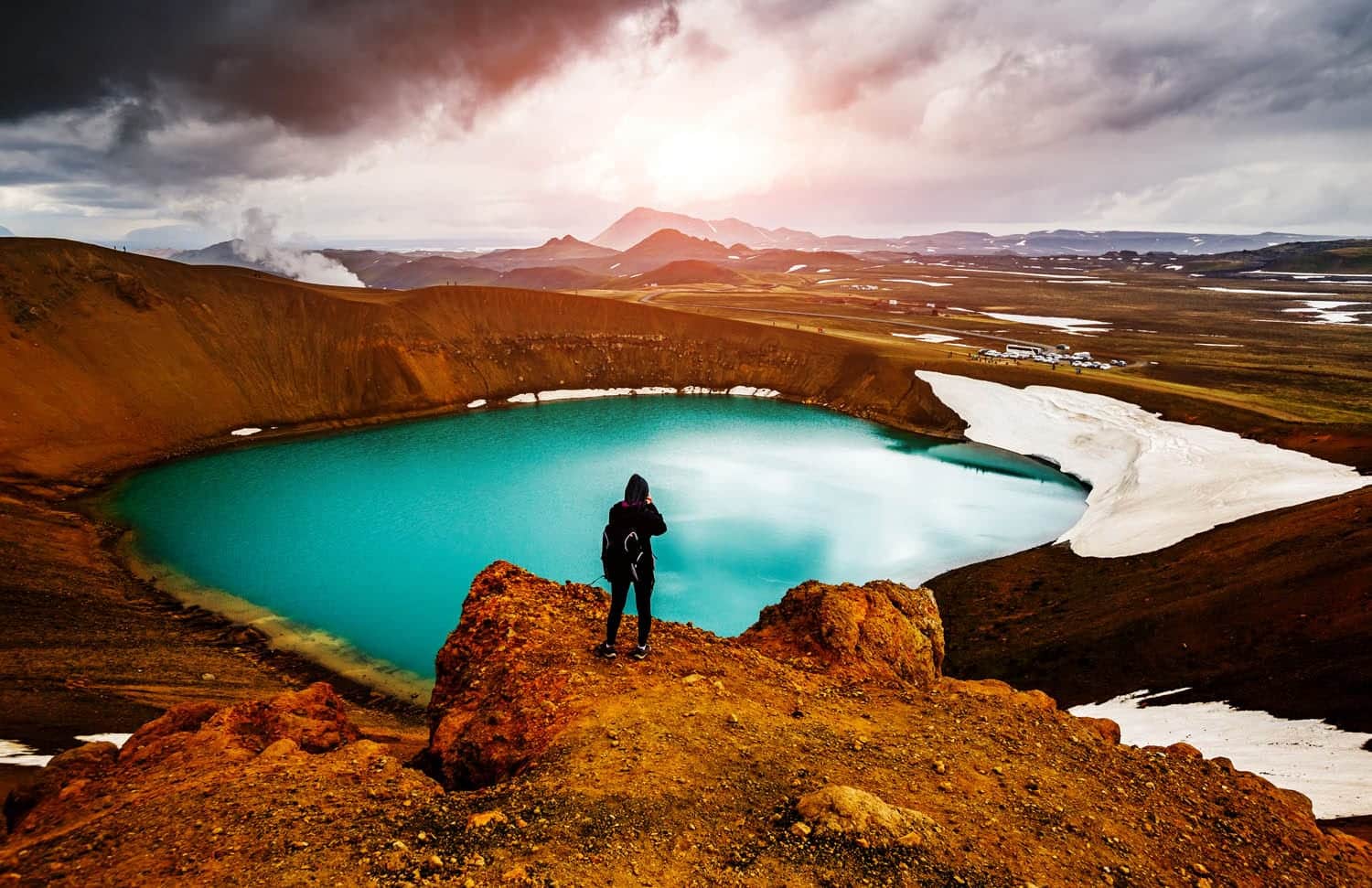
One of Iceland's Most Active Volcanic Systems, Still Steaming from Its Last Eruption
Krafla sits directly on the Mid-Atlantic Ridge, where the North American and Eurasian tectonic plates are slowly pulling apart, making it one of the most geologically restless areas in Iceland. The caldera measures around 10 kilometres across and sits at 818 metres above sea level, with a fissure zone extending roughly 90 kilometres. In recorded history it has erupted approximately 29 times. The most recent episode, known as the Krafla Fires, involved nine separate eruptions between 1975 and 1984, and was notable for occurring at the same time as a geothermal power station was being built on the caldera rim. The lava that poured out during those eruptions is still clearly visible today, dark and jagged, with steam rising from fissures and fumaroles across the surface.
The two main areas to explore within the Krafla system are Leirhnjukur and the Víti crater. Leirhnjukur, meaning mud peak, is a 523-metre volcanic mound surrounded by boiling mud pots, steaming vents, and the fresh black lava fields of the Krafla Fires. A marked loop trail of around 5 kilometres runs through the lava field and takes one to two hours to complete. In some areas the ground is still warm underfoot from the 1984 eruption, and sturdy footwear is essential on the uneven surface. The Víti explosion crater sits on the northern rim of the caldera and is covered on its own attraction page. Both are reached from the same car park, reached via Route 863 heading northeast from the Myvatn area.
Krafla pairs naturally with Lake Myvatn, the Namafjall geothermal area, Dimmuborgir, and the Myvatn Nature Baths as part of a full day in North Iceland. The Krafla geothermal power station, visible from the road, is one of Iceland's main sources of electricity and offers a striking contrast between raw volcanic landscape and modern energy infrastructure. The area is monitored continuously by the Icelandic Meteorological Office, and access roads are closed if conditions become hazardous. Check safetravel.is and road.is before visiting.


