
Reykjanes Lighthouse
Reykjanesviti is Iceland's oldest lighthouse, standing on Bæjarfell hill at the southwestern tip of the Reykjanes Peninsula, about 40 kilometres from Reykjavík and 20 kilometres from Keflavík International Airport. The original lighthouse was built in 1878 but was destroyed by earthquake damage and coastal erosion by 1905, and the current structure was completed in 1907 to 1908 on higher ground. Its light signal sits 69 metres above sea level. The lighthouse overlooks the point where the North American and Eurasian tectonic plates meet, and the Gunnuhver geothermal mud pools, the largest in Iceland, lie within sight of the hill.
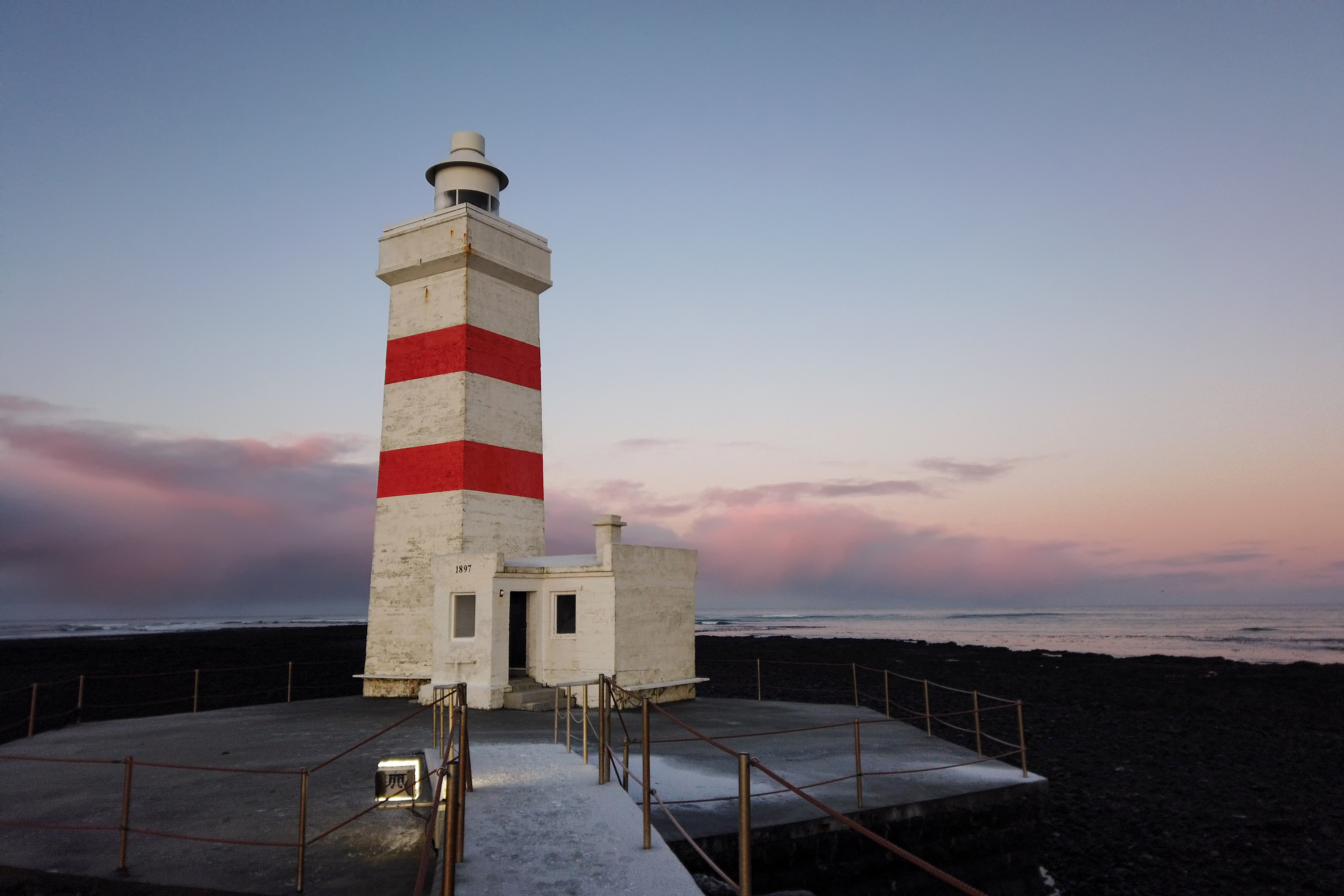
Iceland's Oldest Lighthouse, Rebuilt After Earthquakes, at the Edge of Two Tectonic Plates
The story of Reykjanesviti is one of persistence against a geologically unstable landscape. The first lighthouse on the Reykjanes Peninsula tip was completed in 1878, making it the oldest in Iceland, but the Reykjanes Peninsula sits directly on the Mid-Atlantic Ridge where the North American and Eurasian tectonic plates meet, and the ground here is among the most seismically active in the country. By the mid-1880s a major earthquake had damaged the original structure beyond repair, and continued seismic activity and cliff erosion made the original site increasingly precarious. A new lighthouse was built on Bæjarfell hill in 1907 to 1908, positioned higher and further back from the eroding cliff edge. The current structure stands 31 metres tall with a light signal height of 69 metres above sea level, and it guided live-in lighthouse keepers and their families through decades of isolation until the last keepers left in 1999. Cliff erosion continues to be monitored and the lighthouse may need to be relocated again in the coming years.
The landscape around the lighthouse is one of the most geologically active accessible spots in Iceland. The Gunnuhver hot spring and mud pool area lies within sight of the hill, a field of boiling clay and steam vents that holds the largest mud pot in Iceland. Gunnuhver is named after a ghost from local folklore, said to be the spirit of a troublesome woman whose restless haunting of the peninsula was finally ended by a priest who lured her into the boiling spring. The area around the lighthouse and Gunnuhver sits on the Reykjanesvirkjun geothermal power plant ridge, and the combination of raw volcanic activity, coastal cliffs, and Atlantic horizon views makes this corner of the peninsula unusually dramatic for somewhere so close to Reykjavík. The Valahnúkamöl boulder beach nearby, a 420-metre ridge of rounded stones, adds another textural contrast to the landscape.
Reykjanesviti is free to visit and accessible year-round via paved roads. From the car park at the base of Bæjarfell hill it is a short walk up to the lighthouse, with wide views over the Atlantic from the top. The site is part of a natural cluster with Gunnuhver and the Bridge Between the Continents, where visitors can walk a footbridge crossing the visible rift between the two tectonic plates. The peninsula tip is about 40 kilometres from central Reykjavík and 20 kilometres from the international airport, making it a practical stop on arrivals or departures as well as a half-day trip from the capital.

