
Ytri Tunga Beach
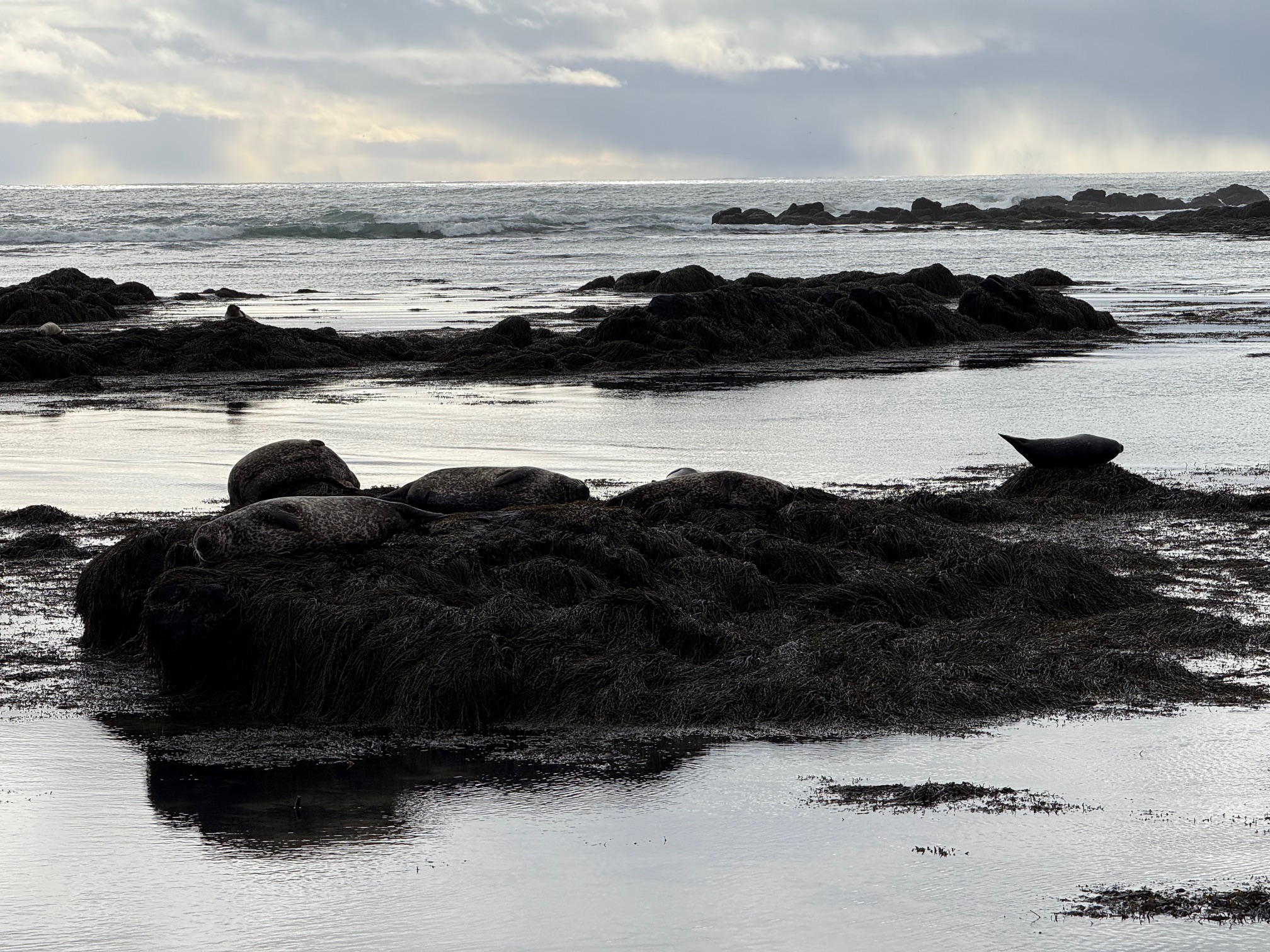
Ytri Tunga is a beach on the southern shore of the Snæfellsnes Peninsula best known for its year-round colony of harbour and grey seals, which rest on a low-lying offshore reef and are often visible at close range from the shoreline. The name means outer tongue in Icelandic, a reference to that reef extending from the beach into the sea. Unlike almost every other beach in Iceland, Ytri Tunga has golden sand rather than black volcanic sand, and the combination of pale shore, dark offshore rocks, and the Snæfellsjökull glacier visible in the distance on clear days makes it one of the more distinctive coastal stops on the peninsula.
A Golden Sand Beach on Snæfellsnes with One of Iceland's Most Reliable Seal Colonies
Ytri Tunga sits on the farm of the same name on the south side of the Snæfellsnes Peninsula, about halfway along the coastal Route 54. The beach is unusual in Iceland for its golden-white sand, a contrast to the black volcanic shores that line most of the country's coastline. The offshore reef that gives the beach its name, jutting out from the shoreline like a tongue into the sea, provides a stable haul-out site for seals that is sheltered from the worst of the Atlantic weather. The colony consists mainly of harbour seals, which are smaller and rounder-faced, alongside a smaller number of grey seals, which are larger with a longer, more horse-like muzzle and tend to keep to rocks further from shore. Both species are present year-round, though numbers are highest in summer when lower tides expose more of the reef.
The best conditions for seal watching are at low tide, particularly during the summer months from May to August, when the colony is most active and the animals can be seen hauled out on the rocks in numbers. Seal pups appear in June and July, and young animals are often noticeably less cautious around people than adults. Visitors are asked to keep a distance of at least 50 metres from the seals and to avoid any behaviour that might startle them into the water. Beyond the seals, the beach attracts Arctic terns, eider ducks, and oystercatchers, and the shallow tidal pools are worth exploring at low water. On clear days the ice cap of Snæfellsjökull is visible to the west.
Ytri Tunga is reached via a short signposted track off Route 54 on the south side of the Snæfellsnes Peninsula. A small car park sits close to the beach. There are no facilities on site, so bring water and layers as conditions on the peninsula can change quickly. The beach is about 150 kilometres from Reykjavík, roughly two hours by car, and fits naturally into a full Snæfellsnes day circuit alongside stops at Búðir, Arnarstapi, Djúpalónssandur, and Kirkjufell.

