Day two starts east of your hotel and works back west to Reykjavík, covering six stops along one of Iceland's most varied stretches of coastline.
The centrepiece is the Katla Ice Cave, reached from Vík. A guide leads you into the volcanic cave system beneath Mýrdalsjökull, one of Iceland's largest glaciers, which sits above the Katla volcano. The cave walls layer volcanic ash and compressed glacier ice, and the formations shift every season as the glacier moves. Crampons and ice helmets are provided; the tour runs approximately 90 minutes to two hours inside the cave. The standard booking is a small group tour, but if you'd prefer to have the cave to yourselves, your Travel Consultant can arrange a private slot before you travel.
From Vík, your guide turns west. Reynisfjara Black Sand Beach comes first: jet black sand, hexagonal basalt columns rising from the cliff face, and the Reynisdrangar sea stacks offshore. The Atlantic swell here is unpredictable and powerful. Your guide will brief you on the safe distance from the waterline before you approach.
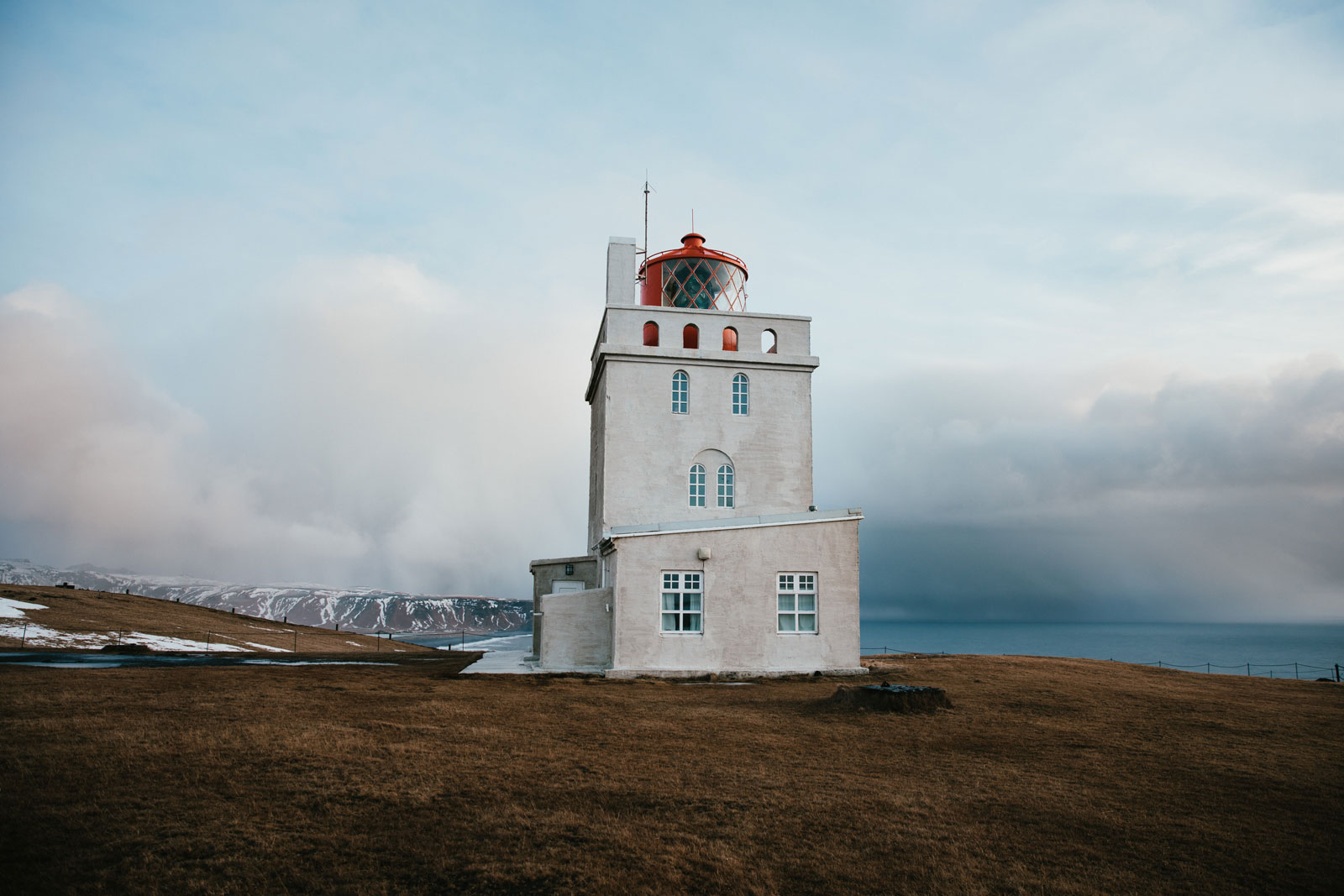
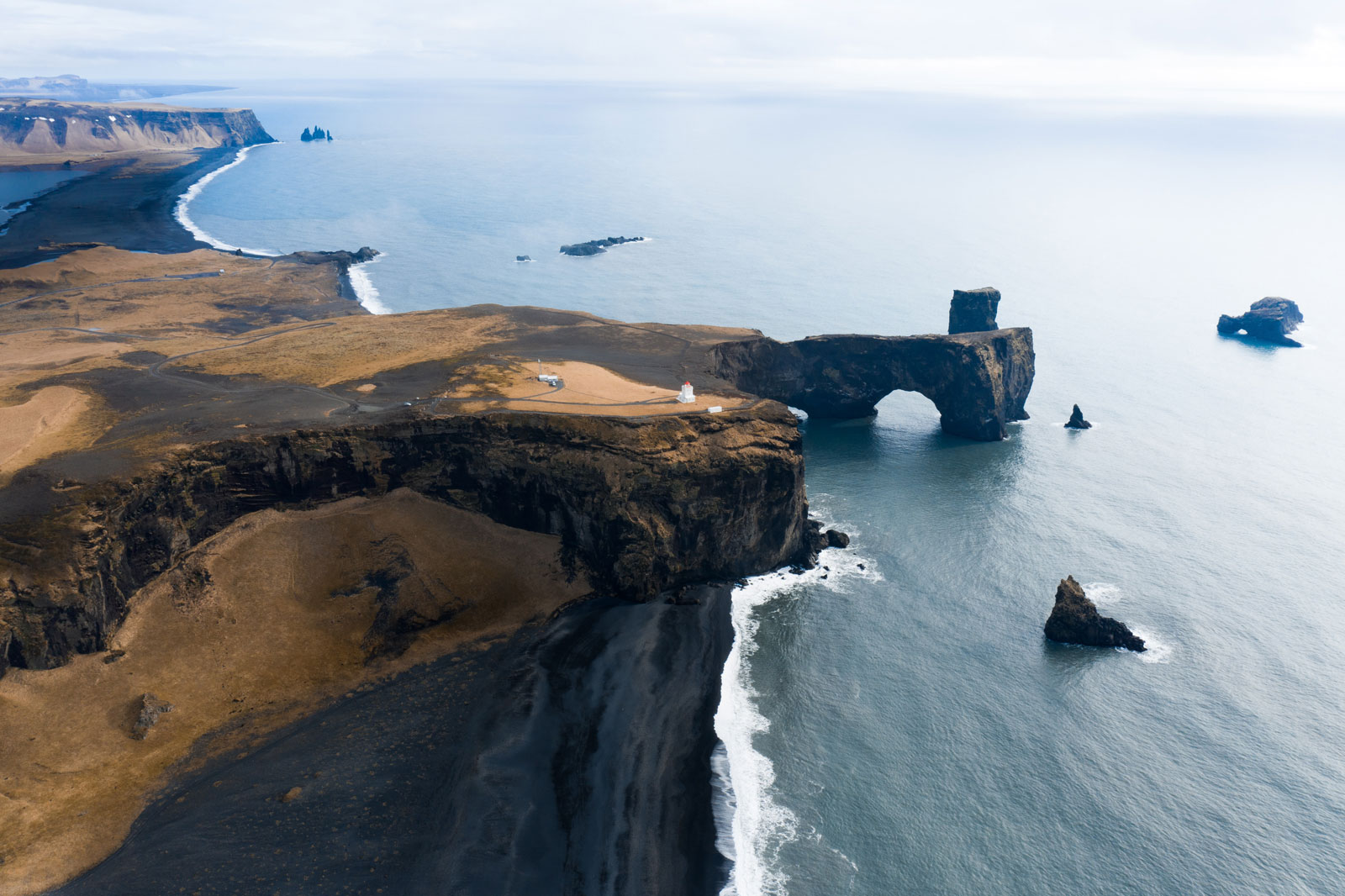
Dyrhólaey is a short drive west, a coastal promontory that juts into the sea with a natural rock arch and a lighthouse viewpoint. On a clear day the views back along the black sand coast toward Vík and Reynisfjara are some of the most dramatic on the south coast.
Skógafoss falls in a wide, unbroken sheet roughly 60 metres down. The base viewpoint is a flat 100-metre walk from the car park, and in winter ice builds on the rock face around the falls. The staircase to the top is steep; your guide will advise based on conditions.
Seljalandsfoss is the last stop before Reykjavík. A path runs behind the curtain of water when conditions allow: approximately 200 metres on flat to moderate terrain. Your guide will check whether the loop is open before you attempt it, as the path can ice over in winter. From Seljalandsfoss, your guide drives you back to Reykjavík and drops you at your accommodation.